2.7.54 impNIDIAdem
Contents
Menu Information
Data: Import from File: NI DIAdem (DAT)
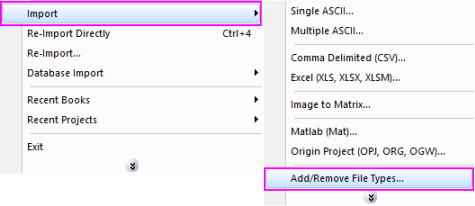
If you do not see this file type, choose Data: Import from File: Add/Remove File Types...
 | To add drag & drop support for a file type, see Import Filter Manager. |
This X-Function supports file re-import. See this topic for details.
Brief Information
Import National Instruments DIAdem 10.0 dat files
Command Line Usage
impNIDIAdem fname:="c:\test.dat";
X-Function Execution Options
Please refer to the page for additional option switches when accessing the x-function from script
Variables
| Display Name |
Variable Name |
I/O and Type |
Default Value |
Description |
|---|---|---|---|---|
| File Name | fname |
Input string |
|
Filename of the file to be imported. |
| File Info And Data Selection | trfiles |
Input TreeNode |
|
This is used to tweak the import options in the dialog. Please see the Description part of this document for details.
|
| Import Options | options |
Input TreeNode |
|
|
| Output | orng |
Output Range |
|
This is used to specify the output range. See the syntax here. |
| Header Info | trheader |
Output TreeNode |
|
This is for outputting the header information. It is hidden from the GUI. Users are not advised to use this variable.
|
| Repeat Import | reimp |
Input int |
|
Specifies whether or not reimport is allowed. |
Description
This X-Function is used for importing NI DIAdem 10.0 dat files.
Details on Some Dialog Options
- Import Options(options)
- Please see this page for more details.
Examples
- The following example imports a NI DIAdem data:
- a. From the Origin menu, select Data: Import from File: NI DIAdem (DAT). This opens the Import DIAdem (*.dat) file dialog for you to choose the import file.
- b. Browse to the folder where your data file is. Select the file and click the Add File(s) button. Click OK to close the dialog box.
- c. In the impNIDIAdem dialog box, select the channels you want by checking before them. Click Ok to close the dialog.
- The following script command imports a NI DIAdem file (c:\test.dat) without opening the dialog:
Fname$="c:\test.dat";
impNIDIAdem;