5.5.16.2.2 Factorial Design
Contents
Introduction
Factorial designs systematically vary multiple factors simultaneously to study their individual effects and joint influences. Unlike one-factor-at-a-time approaches, they reveal interactions—where the effect of one factor depends on the level of another—and provide efficient, statistically robust results.
Origin provides three common factorial design types, each suited to different experimental goals and constraints.
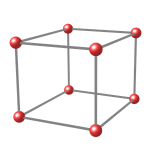
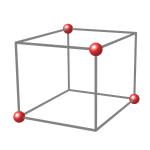
2-Level Factorial
In a 2-level factorial design, each factor has 2 levels. If responses are measured at all combinations of the experimental factor levels, the design is called full factorial (or full resolution). However, this may result in an exceedingly large number of runs and increase your time and cost. Instead, you can use fractional factorial designs that exclude some of the factor level combinations. Fractional factorial designs typically divide the number of runs in a full factorial design by a power of 2. If all factors are numeric, you can add a set of center points to the design, whose values are the means of the values used in the factorial portion.
Plackett-Burman
The Plackett-Burman design is a special type of 2-level factorial design with resolution III. It is used to identify the most important factors at the early stage of experiments. Usually 2-way interactions are neglected in Plackett-Burman designs. Number of runs should be a multiple of 4 and no less than 12.
General Full Factorial
General full factorial design has full resolution. Factors can have more than 2 levels (discrete values). The design is created with all possible combinations of these levels across all factors.
| 2-Level Factorial | Plackett-Burman | General Full Factorial | |
|---|---|---|---|
| Factor levels | 2 | 2 | Any (≥2) |
| Primary use | Screening and modeling | Screening only | Categorical factors |
| Interactions | Estimable (full) or partially confounded (fractional) | Confounded with main effects | Fully estimable |
| Curvature | Detectable with center points | Not detectable | Detectable if levels span range |
| Run efficiency | Moderate | High | Low |
| Alias structure | Clean and predictable | Complex | None (full factorial) |
| Runs | 2^k or 2^(k-p) | Next multiple of 4 > factors | Product of all level counts |
| Best when | Need interaction estimates; building predictive models | Many factors, limited runs, interactions assumed negligible | Factors have natural categorical levels; need complete coverage |
Create the Design
Create Factorial Design
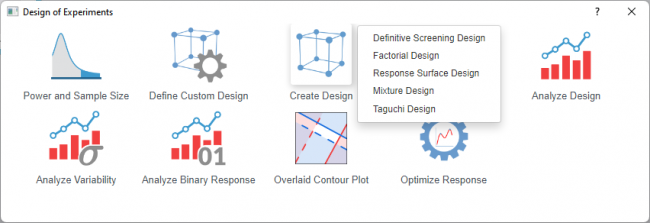
- Select Statistics: Quality Improvement: Design of Experiment from Origin menu
- Select the Create Design icon and choose Factorial Design from the list
Create Custom Factorial Design
Please refer to the define custom design page for instructions
|
Topics covered in this section: |