 ,
,
When your worksheet data are not regularly spaced in the X and Y dimensions, then you should use one of Origin's 5 gridding methods for random or irregularly-spaced XY data:
This gridding method is based on the algorithm of Renka and Cline (1984). In sequence, the primary operations are:
In the case of 200~1000 uniformly distributed data points, the Renka-Cline method is a good choice.
This method implements the modified Shepard gridding method as described by Franke and Nielson. This is a distance-based weighted gridding method which interpolates data by:
,
where  is the underlying function at nodes (
 ,
,  ), and
  is the weights. To localize the calculation, and
  are computed from the data points lying within the circle with center (, ) of radius
  and
and  , respectively.
To begin with, the weights are defined as:
 .
.
For a given radius , the relative weight  is:
is:
![w_k=[\frac{(R_w-d_k)_{+}}{R_wd_k}]^2](/origin-help/en/images/Gridding_Methods_for_Randomly_Spaced_Data/math-0e141a3a2c838ddf192009baaf5116ad.png?v=0 "w_k=[\frac{(R_w-d_k)_{+}}{R_wd_k}]^2") for
for
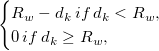
and  is the Euclidean distance between (x, y) and (
 ,
,  ):
):
 .
.
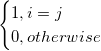
For any > 0, we have:
 =
=
 .
.
Subsequently, the nodal function is replaced by a local approximation function  :
:

is the weighted least-square quadratic fitted function to the data located within of nodal points. So the coefficients minimize:
![\varepsilon _k=\sum_{i=1,j\neq k}^N\omega _i(x_k,y_k)[c_{k1}(x_i-x_k)^2+\ldots +c_{k5}(y_i-y_k)+F_k-F_i]^2](/origin-help/en/images/Gridding_Methods_for_Randomly_Spaced_Data/math-8ab8ecc395dfc1db378345af3deb4929.png?v=0 "\varepsilon _k=\sum_{i=1,j\neq k}^N\omega _i(x_k,y_k)[c_{k1}(x_i-x_k)^2+\ldots +c_{k5}(y_i-y_k)+F_k-F_i]^2")
for
![\omega _i(x,y)=[\frac{(R_q-d_i)_{+}}{R_qd_i}]^2=[\frac{(R_q-||(x_i,y_i)-(x,y)||_2)_{+}}{R_q||(x_i,y_i)-(x,y)||_2}]^2](/origin-help/en/images/Gridding_Methods_for_Randomly_Spaced_Data/math-82914bba8b91c96a6d5fe1c5865f7fe6.png?v=0 "\omega _i(x,y)=[\frac{(R_q-d_i)_{+}}{R_qd_i}]^2=[\frac{(R_q-||(x_i,y_i)-(x,y)||_2)_{+}}{R_q||(x_i,y_i)-(x,y)||_2}]^2") .
.
It can be seen above that the interpolation function is a local approximation function and depends on the radius of influence about nodal points, and . Two integers, and
and  are used to calculate and (these are the parameters q and w of the function, and are referred to as the Quadratic Interpolant Locality Factor and Weight Function Locality Factor, respectively): (for more information, please see "The XYZ Gridding Dialog Box" later in this section.)
 and
and  ,
,
where n is the number of data points and D is the maximum distance between any pair of data points. So  and can be considered to be the average numbers of data points lying within distances and respectively, of each node.
Increasing the values of and will make the calculation more global; likewise, decreasing their values will make the calculation more local. Generally speaking, setting  works well. By default,
  , and
, and  . However, the following constraints must be satisfied:
  .
.
The XYZ Gridding dialog box calls the NAG library to perform the Shepard gridding method. Origin also provides these X-Function-based Shepard gridding methods: xyz_shep_nag and xyz_shep, which implements this method using and .
This function provides a method for random matrix conversion based on Thin Plate Spline (TPS) algorithm. Thin Plate Spline is a physical interpolation method. To generate gridding data, this method assumes that all the data points are distributed on a thin, elastic plate, or spline. The plate is constrained at the grid points and forms a 2-dimensional surface by spanning the grid points. The surface is deformed between the points to form a likely fit to the data. The best results are generally found by minimizing the so-called "bending energy function" of the spline.
Since this method involves minimizing the bending energy, the less deformation of the plate the better. This calculation is similar to minimum curvature computing. Surface plots produced by TPS gridding may exhibit a greater degree of smoothness than those produced by other methods, so this method is best suited to interpolation of locally flat surfaces.
The mathematical description of the TPS algorithm is, given the bending energy function:
 ,
,
and the minimizing function is:
 ,
,
where .
.
To perform TPS gridding, you need to specify the Smoothing parameter, which controls the smoothness of the interpolated surface and the Extrapolation parameter, which influences matrix cell values lying outside of the original data range.
For more detailed information on TPS, please see Donato and Belongie, Approximation Methods for Thin Plate Spline Mappings and Principal Warps.
Kriging -- named for mining engineer D. G. Krige -- is an established geostatistical method for interpolating spatial data. This technique employs a weighted moving average interpolation (extrapolation) method that minimizes the estimated variance of a predicted point (grid nodes) from the weighted average of its neighbors. The weighted value is determined by the spatial correlation structure of the original data.
This algorithm requires a model of spatial continuity, or dependence. Typically, we separate the process into two steps:
When performing kriging, you can control the process by configuring the following parameters:
For more detailed information on kriging, please see Stein, Interpolation of Spatial Data.
The weighted average method is a simple weighted average of the points with the weight equal to 1/r, where r is the distance of each point from the cell within the searching radius. If there is no value within the search radius, the radius is increased until at least one point is encountered. Increasing the search radius means that each point is more interrelated to neighboring points, producing a smoother surface that may lose fine details.