2.42 Design of Experiments
Introduction
Design of Experiments (DOE) is a systematic statistical approach for planning, conducting, and analyzing experiments. DOE helps identify the factors that influence a response, understand relationships between factors and responses, and determine factor settings that achieve desired results.
Unlike changing one factor at a time, DOE allows multiple factors to be investigated simultaneously. By carefully selecting experimental runs, DOE can provide information about the effects of individual factors, interactions between factors, and, for suitable designs, the response behavior within the experimental region.
DOE in Origin
Origin provides tools for creating, analyzing, and optimizing experimental designs. Depending on the design type and analysis method, you can use Origin to:
- Define experimental factors and responses.
- Create an experimental design.
- Conduct experiments and enter the response data.
- Analyze the experimental results.
- Interpret statistical results and diagnostic plots.
- Optimize factor settings to achieve desired response characteristics.
The DOE tools in Origin support a range of experimental design methods as below
| Definitive Screening Design | Screen factors and identify important effects, including potential curvature. |
|---|---|
| Factorial Design | Investigate main effects and interactions between factors. |
| Response Surface Design | Model and optimize responses, including curvature. |
| Mixture Design | Study the effects of component proportions in a mixture. |
| Taguchi Design | Study factor effects using Taguchi experimental design methods. |
| Optimal Design | Create a design optimized for specified model and experimental constraints. |
Workflow
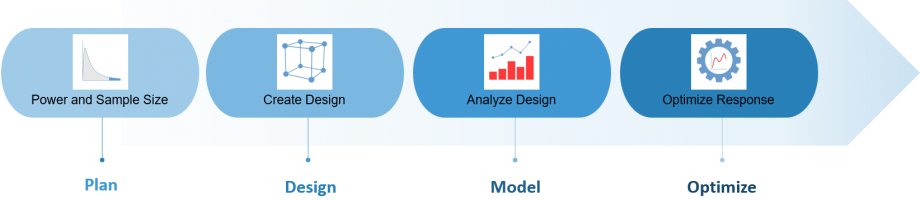
| Planning | Designing | Modeling | Optimizing & Visualization |
|---|---|---|---|
Sample Project File
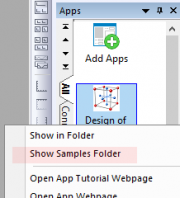
- Right-click on the app in Apps Gallery and choose Show Samples Folder from the context menu
- Drag and drop the project file from the opened folder to the Origin workspace to open it
|
Topics covered in this section: |